
Sciatica Relief : Self Care guide: 6 stretches, acupressure and massage.
Sciatica Relief : Self Care guide: 6 stretches, acupressure and massage
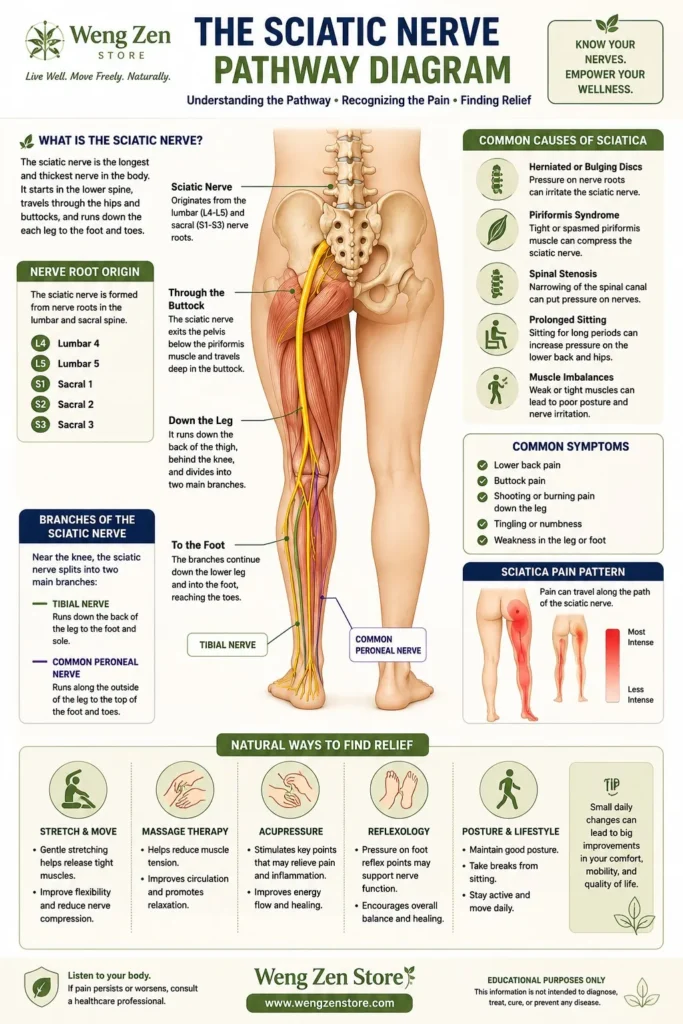
Sciatica is one of the most common causes of lower back, hip, and leg pain. It occurs when the sciatic nerve becomes irritated, compressed, or inflamed. The sciatic nerve is the largest nerve in the body, originating in the lower spine and traveling through the hips, buttocks, and down each leg.
Sciatic pain can range from mild discomfort to severe burning, tingling, numbness, or shooting pain that affects daily activities. While medical treatment may be necessary in some cases, many individuals find significant relief through conservative approaches such as stretching, exercise, massage, acupressure, and reflexology.
This sciatica relief self care guide 6 stretches, acupressure and massage explores practical methods that may help reduce tension and discomfort associated with sciatica.
What Causes Sciatica?
Sciatica is often a symptom rather than a condition itself. Common causes include herniated or bulging disc, degenerative disc disease, spinal stenosis, piriformis syndrome, muscle imbalances, prolonged sitting, poor posture, pregnancy , injury , or trauma, The sciatic nerve can become compressed or irritated anywhere along its pathway.
Sciatica relief: Muscles Commonly Involved
Understanding the muscles that contribute to sciatic pain can help target treatment more effectively.
- Piriformis Muscle
The piriformis
is a small muscle deep within the buttocks. When tight or inflamed, it can compress the sciatic nerve, resulting in a condition known as piriformis syndrome.
Symptoms: Deep buttock pain when sitting, tingling down the leg and hip tightness
- Gluteus Medius and Gluteus Maximus
Weak or tight gluteal muscles can alter movement patterns and increase stress on the lower back and hips. Signs: hip instability, lower back discomfort, and difficulty walking
- Hamstrings
Tight hamstrings can pull on the pelvis and contribute to lower back strain.https://www.wengzenstore.com/product/back-massager-seat-cushion-with-heat-and-10-vibration-motors-for-pain-relief-black-color-black/
Symptoms:Tightness behind the thigh, reduced flexibility, and increased nerve tension
- Hip Flexors
Sitting for long periods often causes hip flexors to tighten.This can change pelvic alignment and contribute to sciatic symptoms.
- Quadratus Lumborum (QL)
Located in the lower back, this muscle often becomes overworked when posture is poor. Tension in the QL can contribute to low back pain and nerve irritation.
Sciatica Relief : Self Care guide: 6 stretches, acupressure and massageAcupressure Points for Sciatica Relief
Acupressure may help decrease muscle tension and improve circulation.
Apply firm but comfortable pressure for 30-60 seconds while breathing normally.
GB30 (Huantiao)
Located in the buttock near the hip joint.
Benefits:may reduce buttock pain, helps release piriformis tension, And ffrequently used for sciatica symptoms
BL 40 (Weizhong)
Located behind the knee.
Benefits:Relaxes the back of the leg, and may help reduce nerve discomfort
BL23 (Kidney Shu)
Located in the lower back near the spine.
Benefits:Supports lower back comfort and helps reduce lumbar tension
GB34 (Yangling quan)
Located on the outside of the lower leg below the knee.
Benefits: may improve flexibility and supports muscle relaxation
BL60 (Kunlun)
Located behind the ankle.
Benefits:Often used for lower back pain and may help decrease nerve irritation
Sciatica Relief : Self Care guide: 6 stretches, acupressure and massageReflexology Areas Associated with Sciatica
Reflexology practitioners believe specific areas of the feet correspond with different parts of the body.
https://www.wengzenstore.com/product/footology-mat-accu-pressure-and-massage-for-feet/While research is still evolving, many people report relaxation and pain relief.
Spine Reflex
Located along the inside edge of the foot.Work this area from heel to big toe using thumb-walking techniques.
Hip Reflex
Located around the outer heel and may help relieve hip tension.
Sciatic Nerve Reflex
Often found running through the heel region.Gentle pressure may help promote relaxation.
Lower Back Reflex Area
Located near the inner heel. This area is commonly targeted when addressing low back discomfort.
Massage Techniques for Sciatica Relief
Massage may help reduce muscle tightness that contributes to sciatic nerve irritation.
Glute Massage
-
- Using a massage ball:
Sit on the floor.
Place the ball under the painful buttock.
Slowly roll over tender areas.
Hold pressure on trigger points for 20-30 seconds.
Piriformis Release
Place a tennis ball beneath the piriformis muscle.
Gently lean into the pressure and breathe deeply.
- This technique may help decrease tension around the sciatic
- Foam Rolling
Target:
Glutes
Hamstrings
Calves
Hip muscles
Roll slowly and avoid direct pressure on painful nerves.
Trigger Point Therapy
Common trigger points include:
Piriformis
Gluteus medius
Quadratus lumborum
Hamstrings
Apply sustained pressure until the muscle begins to relax.
6 Stretches for Sciatica Relief
Movement is often more beneficial than prolonged rest.
Stop any exercise that significantly worsens symptoms.
- Piriformis Stretch
How to Perform
Lie on your back.
Cross one ankle over the opposite knee.
Pull the supporting leg toward your chest.
Hold 30 seconds.
Repeat 2-3 times per side.
Benefits
Reduces piriformis tension
Improves hip mobility
- Knee-to-Chest Stretch
Lie on your back.
Pull one knee toward your chest.
Hold for 20-30 seconds.
Repeat several times.
Benefits
Relaxes lower back muscles
Improves flexibility
- Cat-Cow Stretch
Start on hands and knees.
Arch your back upward.
Slowly lower and extend the spine.
Repeat 10-15 times.
Benefits
Improves spinal mobility
Reduces stiffness
- Pelvic Tilts
Lie on your back with knees bent.
Tighten abdominal muscles.
Flatten your back against the floor.
Perform 10-15 repetitions.
Benefits
Strengthens core muscles
Supports spinal alignment
- Glute Bridges
Lie on your back.
Bend your knees.
Lift hips toward the ceiling.
Perform 10-15 repetitions.
Benefits
Strengthens glutes
Improves hip stability
- Sciatic Nerve Glide
Sit upright in a chair.
Extend one knee.
Pull toes toward the body.
Return slowly.
Repeat 10 times.
Benefits
Encourages nerve mobility
May reduce nerve sensitivity
Lifestyle Tips for Sciatica Relief
Improve Posture
Maintain a neutral spine when sitting and standing.
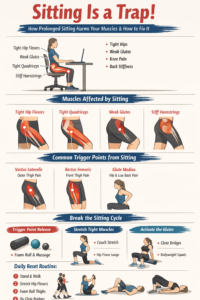
Avoid Prolonged Sitting
Stand and move every 30-60 minutes.
Stay Active
Walking is often one of the best low-impact activities for sciatica.
Maintain a Healthy Weight
Excess weight may increase spinal stress.
Sleep Position
Many individuals find relief sleeping:
On their side with a pillow between the knees
On their back with a pillow beneath the knees
When to Seek Medical Attention
Contact a healthcare provider if you experience:
Progressive weakness
Loss of bowel or bladder control
Severe numbness
Sudden worsening pain
Symptoms following trauma
These symptoms may indicate a more serious condition requiring immediate evaluation.
Final Thoughts
Sciatica can be frustrating, but many people find relief through a combination of stretching, strengthening exercises, massage therapy, acupressure, and reflexology. Addressing tight muscles such as the piriformis, glutes, hamstrings, and lower back muscles may help reduce pressure on the sciatic nerve and improve overall mobility.
Consistency is often the key. Small daily efforts—such as gentle stretching, regular walking, self-massage, and posture awareness—can contribute to long-term improvements in comfort and function.
Shop With Confidence ✔ 30-Day Money-Back Guarantee ✔ Safe & Secure Checkout ✔ Real Customer Support ✔ Quality You Can Trust