
10 Desk tips for wellness &workflow
10 Desk tips for wellness & workflow

THE ERGONOMIC EDGE: A PROFESSIONAL’S GUIDE TO DESK WELLNESS
Quick Summary
Sitting at a desk all day quietly takes a toll — on your muscles, your energy, and your focus. This guide breaks down ten practical, science-backed wellness tips you can do without leaving your chair: fixing your posture with the 90/90 rule, sneaking in desk exercises, using breathing techniques to reset your nervous system, and performing self-massage to release tension. Each tip takes 30 seconds or less. The takeaway: wellness at your desk isn’t a luxury — it’s maintenance. Start with one tip, commit for a week, and build from there.
10 Desk tips for wellness & workflow
In the modern professional world, the desk is our command center. It is where deals are closed, code is written, and strategies are built. However, it is also a potential hazard zone for your long-term health. We often sacrifice our physical and mental well-being for productivity, telling ourselves we’ll “stretch later” or “meditate when things calm down.”
But here is the truth: Your body is the most important asset in your career. Chronic sitting is often referred to as “the new smoking,” linked to muscle atrophy, metabolic issues, and mental fatigue. To maintain high performance, you need to treat wellness not as a luxury, but as a maintenance requirement.
Here is your comprehensive guide to integrating wellness into your workday — without leaving your desk.
10 Desk tips for wellness & workflow
1. The Musculoskeletal Fix: Beyond “Good Posture”

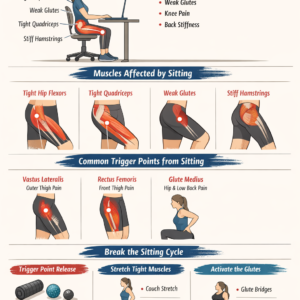
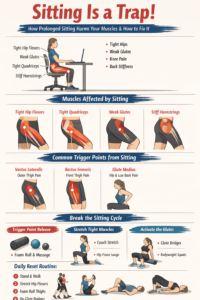
We hear a lot about “sitting up straight,” but static posture is actually a myth. The best posture is a moving posture. When you sit still for hours, your glutes effectively “turn off,” and your hip flexors tighten, pulling your pelvis out of alignment.
· The 90/90 Rule: Ensure your hips and knees are at roughly 90-degree angles. Your feet should be flat on the floor. If they aren’t, use a footrest. This prevents lower back strain.
· Monitor Height: The top of your screen should be at or slightly below eye level. If you are looking down, you are placing immense strain on your cervical spine. Your monitor should be an arm’s length away.
· The “Micro-Break” Strategy: Set a timer every 50 minutes. Stand up, roll your shoulders back three times, and squeeze your shoulder blades together. This counteracts the “computer hunch” and reactivates your postural muscles.
2. Movement as Medicine: Desk Exercise
You don’t need a gym membership to combat a sedentary lifestyle. You need “exercise snacks” — short bursts of movement that stimulate blood flow and wake up your nervous system.
· The Desk Push-Up: Place your hands on the edge of your desk, shoulder-width apart. Step back and lower your chest to the desk, then push away. This engages the chest and triceps and gets the heart rate up.

· Chair Squats: Stand up and sit down without using your hands. Do this ten times. This is a functional movement that strengthens the quads and glutes — the very muscles that go dormant when you sit.

· Calf Raises: While sitting or standing, raise your heels off the floor and lower them slowly. This acts as a “second heart,” pumping blood from your legs back up to your heart and preventing stagnation.
3. The Mental Reset: Mindfulness and Meditation
Cognitive load is real. The constant pinging of emails and the pressure to perform can send your nervous system into “fight or flight” mode, draining your energy by 2:00 PM. Meditation at your desk isn’t about becoming a monk; it’s about rebooting your brain’s operating system.
· The 4-7-8 Breath: Inhale for 4 seconds, hold for 7 seconds, exhale for 8 seconds. This activates the parasympathetic nervous system, lowering cortisol levels and heart rate immediately.
· The “Eyes Closed” Micro-Meditation: Close your eyes for 60 seconds. Focus entirely on the sounds around you — the hum of the AC, the typing in the next cubicle. This practice of “open awareness” helps reset your attention span and reduces mental clutter.

· Single-Tasking: Try to work on one task at a time for 20-minute intervals without checking your phone. This reduces the “switching cost” of your brain’s energy.
4. Self-Massage: Tension Release Techniques
You don’t need a masseuse or retainer to relieve tension. You can perform targeted self-massage (acupressure) at your desk to release the physical manifestations of stress.

· The Web of the Hand: Pinch the fleshy web between your thumb and index finger and massage it firmly. This releases tension in the hands and forearms, helping to prevent carpal tunnel syndrome.
· Temple and Jaw Release: Place your fingertips on your temples and make slow, circular motions. Then, use your knuckles to gently massage the masseter muscle (the side of your jaw) while keeping your mouth slightly open.
· Occipital Release: Place your thumbs at the base of your skull, where it meets the neck. Apply gentle upward pressure and hold for 30 seconds. This is a game-changer for tension headaches caused by screen time.
5. The Ripple Effect: Hydration and Eye Health
Wellness at the desk is also about the inputs. Dehydration is a leading cause of afternoon fatigue. Keep a water bottle on your desk and aim to finish it by lunch. Furthermore, the 20-20-20 rule is vital for eye health: Every 20 minutes, look at something 20 feet away for 20 seconds. This relaxes the ciliary muscles in your eyes and prevents digital eye strain.
10 Desk tips for wellness & workflow
FAQ
1. How often should I take movement breaks?
Aim to stand up and move at least once every 50 minutes. Even 30 seconds of movement — a few chair squats, a short walk to refill your water, or a set of calf raises — is enough to reactivate dormant muscles and restore circulation. Set a timer if you tend to forget; your energy levels by mid-afternoon will show the difference.
2. Do I need a standing desk to stay healthy at work?
No. A standing desk can help, but it isn’t a requirement — and standing all day comes with its own problems. The real goal is variety. Alternating between sitting, standing, and short movement breaks matters far more than any single piece of furniture. If you already have a desk, start with the free fixes in this guide before investing in new equipment.
3. Is an office chair with massage and lumbar support actually worth it?
For anyone sitting six or more hours a day, yes — especially if you deal with lower back stiffness or tension buildup. Lumbar-sacral support helps maintain your spine’s natural curve, and massage functions can ease muscle fatigue between movement breaks. Think of it as support, not a substitute: the chair helps, but it works best alongside regular movement and good posture habits.
4. How long before I notice a difference from these tips?
Most people feel a change within a few days — less afternoon fatigue, reduced neck and back stiffness, and better focus. Posture fixes tend to show results fastest. For lasting change, commit to one tip at a time for a full week before adding another.
5. I’m busy — what’s the single most important tip?
If you only do one thing, fix your setup: hips and knees at 90 degrees, feet flat, monitor at eye level. Poor posture compounds every other problem, and correcting it takes one minute and costs nothing. After that, the 4-7-8 breathing technique is the highest-return habit for stress and focus.
6. Can I do these exercises if I have back pain or an injury?
Check with a healthcare professional first, especially for anything involving the spine, neck, or joints. Most of these tips are gentle and low-risk, but they’re general wellness suggestions — not medical advice. If an exercise causes pain, stop and consult a professional.
10 Desk tips for wellness & work
Who Benefits From Ergonomic Products Like Massage Chairs With Lumbar-Sacral support ?
Professionals who spend six or more hours a day seated t— remote workers, office employees, developers, writers, and anyone in a knowledge-based role — stand to benefit most from ergonomic seating with built-in massage and lumbar-sacral support. These features are especially valuable for people who experience lower back stiffness, poor circulation, or tension buildup from prolonged sitting, as well as those who don’t have the time or space for frequent movement breaks. A chair with targeted lumbar-sacral support helps maintain the spine’s natural curve, while massage functions can ease muscle fatigue and encourage blood flow between active breaks. For anyone whose desk is their primary workspace, it’s a practical investment in comfort, focus, and long-term back health.
10 Desk tips for wellness & workflow
Conclusion
Desk work isn’t going away — but the toll it takes on your body doesn’t have to be inevitable. The ten tips in this guide prove that meaningful wellness doesn’t require a gym membership, a major lifestyle overhaul, or even leaving your chair. A one-minute posture fix, a set of desk push-ups, a few rounds of 4-7-8 breathing, or thirty seconds of self-massage can each make a measurable difference in how you feel by the end of the day. Start with one tip, commit to it for a week, and let the results motivate the next.
And while the right habits come first, the right equipment can make those habits easier to sustain. For professionals who spend most of their waking hours seated, an office chair with lumbar-sacral support and built-in massage isn’t a gimmick — it’s a practical tool that supports your spine, eases muscle fatigue, and helps you stay comfortable between movement breaks. Think of it as part of your maintenance plan: your body is the machine, and it deserves both good habits and good support.
The bottom line: your desk doesn’t have to work against you. With a few small changes and the right setup, it can become a place where you perform at your best — and feel good doing it.
For educational purposes only. Created with AI assist
Shop With Confidence ✔ 30-Day Money-Back Guarantee ✔ Safe & Secure Checkout ✔ Real Customer Support ✔ Quality You Can Trust