
Maintenance Quad relief
Maintenance After a 30-Day Quadriceps Tension Relief Program
How to Keep Your Legs Healthy, Mobile, and Pain-Free
Completing a 30-day quadriceps tension relief program is a major step toward healthier legs. Over the course of a month, consistent work with mobility, massage, acupressure, and strengthening exercises helps reset muscle tone and restore movement.
But here’s something many people overlook:
The real long-term benefits come from maintenance.
Without a simple maintenance routine, daily habits like sitting, walking, driving, exercise, and stress can gradually cause the quadriceps to tighten again.
The good news is that maintaining healthy quadriceps does not require another intense program. Just 5–10 minutes a day and a few focused habits each week can help maintain flexibility, circulation, and muscle balance.
This guide outlines the most effective strategies for maintaining quadriceps health using:
• Muscle awareness
• Acupressure and trigger point care
• Massage techniques
• Mobility exercises
• Functional strengthening
Understanding the Quadriceps
The quadriceps are a group of four muscles located on the front of the thigh. Together they control knee extension, support the hip, and stabilize movement during walking, standing, and exercise.
The quadriceps include:
Rectus Femoris
Runs from the hip to the knee and assists with both hip flexion and knee extension.
Vastus Lateralis
The large outer quad muscle responsible for power and stability.
Vastus Medialis
The inner quad muscle important for knee alignment and stabilization.
Vastus Intermedius
Located beneath the rectus femoris, helping produce knee extension force.
These muscles work constantly throughout the day. When they become overused, under-stretched, or poorly circulated, tension builds and movement becomes restricted.
Why Quadriceps Tightness Returns
Even after successful tension relief, the quadriceps can tighten again due to common lifestyle factors.
Some of the most common causes include:
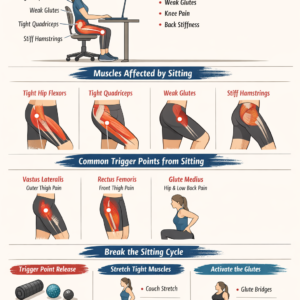
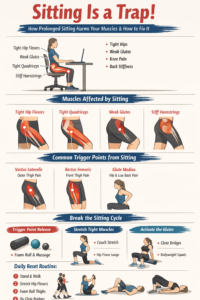
• Prolonged sitting
• Repetitive walking or running
• Cycling
• Poor hip mobility
• Weak glutes
• Limited recovery between workouts
• Stress-related muscle guarding
Maintenance routines help interrupt these patterns before tension builds into chronic stiffness or discomfort.
Weekly Quadriceps Maintenance Plan
A simple structure works best. You do not need a long routine — just consistency.
Daily (5–10 minutes)
• Light mobility
• Gentle acupressure or massage
2–3 Times Per Week
• Deeper trigger point work
• Stretching
2 Times Per Week
• Strength and movement integration
This balance keeps the muscles mobile, strong, and well-circulated.
Acupressure for Quadriceps Maintenance
Acupressure is one of the most effective ways to maintain healthy muscle tone. It stimulates circulation, relaxes muscle fibers, and helps calm the nervous system.
Helpful Quadriceps Acupressure Areas
Upper thigh point
Located midway between the hip and knee on the front of the thigh.
Outer thigh line
Along the vastus lateralis where tension commonly accumulates.
Inner knee area
Supports the vastus medialis and knee stability.
How to Perform
Use your thumb, knuckle, or a massage ball.
Apply gentle pressure for 20–30 seconds.
Breathe slowly and relax the muscle.
Move slowly to the next point.
You should feel mild pressure, not sharp pain.
Practicing this for just a few minutes daily helps prevent the return of chronic tightness.
Trigger Point Maintenance
Trigger points are small areas of tight muscle fibers that reduce circulation and limit movement.
The quadriceps frequently develop trigger points in three areas:
• Upper rectus femoris
• Middle vastus lateralis
• Lower vastus medialis near the knee
Simple Trigger Point Technique
Use a foam roller, massage ball, or your hands.
Locate tender areas in the muscle.
Apply steady pressure for 30–45 seconds.
Release slowly and move slightly to another spot.
Repeat for 2–3 minutes per leg.
Over time this prevents trigger points from becoming painful knots.
Massage Techniques for Quadriceps Recovery
Massage improves circulation and helps remove metabolic waste from muscles.
Maintenance massage can be very simple.
Effective Techniques
Long gliding strokes
Move from knee toward hip to encourage circulation.
Cross-fiber friction
Small sideways movements across tight muscle bands.
Compression kneading
Gentle squeezing of the muscle belly.
Spend 3–5 minutes per thigh once or twice per week.
This is particularly helpful after long periods of sitting or after exercise.
Mobility Exercises for Quadriceps Health
Mobility keeps the muscle fibers long and functional.
These simple exercises can maintain flexibility gained during the 30-day program.
Standing Quadriceps Stretch
Stand tall.
Bend one knee and bring the heel toward the glutes.
Hold the ankle or use a strap.
Keep the knees close together.
Hold 20–30 seconds each side.
Couch Stretch (Hip and Quad Release)
Place one knee on the floor near a wall or couch.
Bring the foot upward against the wall.
Step the other foot forward into a lunge.
Keep your torso upright.
Hold 20–40 seconds each side.
This stretch targets the rectus femoris, which often becomes tight with prolonged sitting.
Gentle Leg Swings
Stand holding a wall or chair.
Swing one leg forward and backward slowly.
Keep the motion controlled.
Perform 10–15 swings each leg.
This improves circulation and joint mobility.
Strengthening to Prevent Quadriceps Overload
One major reason quad tension returns is muscle imbalance.
When the glutes and hamstrings are weak, the quadriceps compensate and become overworked.
Maintaining balanced strength prevents this pattern.
Helpful Maintenance Exercises
Glute Bridges
Strengthens the glutes and reduces quad dominance.
Perform 10–15 repetitions.
Step-Back Lunges
Encourages balanced leg activation.
Perform 8–12 repetitions per leg.
Bodyweight Squats
Promotes healthy coordination between the hips and knees.
Perform 10–15 repetitions.
Focus on slow, controlled movement rather than intensity.
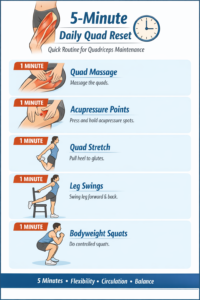
Daily “Quad Reset” Routine (5 Minutes)
If you want the simplest possible maintenance plan, this quick routine works well.
1 minute
Light quad massage
1 minute
Acupressure points
1 minute
Standing quad stretch
1 minute
Leg swings
1 minute
Bodyweight squats
That’s it.
Just five minutes helps maintain flexibility, circulation, and muscle balance.
Signs Your Quadriceps Need Attention
Even with maintenance, occasional tension can return.
Watch for these signs:
• stiffness when standing after sitting
• tightness during walking
• knee discomfort
• reduced hip mobility
• fatigue in the front of the thighs
These signals mean it is time to perform your maintenance routine or revisit deeper trigger point work.
Long-Term Benefits of Quadriceps Maintenance
Consistent care provides several benefits:
• improved mobility
• better knee stability
• increased circulation
• reduced injury risk
• improved posture and walking mechanics
Many people also notice improved energy in the legs and less fatigue during daily activity.
Small daily actions create long-term muscle health.
Final Thoughts
Completing a 30-day quadriceps tension relief program is an excellent foundation for long-term muscle health.
But the goal is not just temporary relief — it is sustainable mobility and resilience.
By combining simple acupressure, trigger point care, massage, mobility work, and strengthening exercises, you can keep your quadriceps functioning smoothly for years to come.
Just remember:
Consistency matters more than intensi
ty.
A few minutes each day can protect the progress you worked hard to achieve.
Your legs carry you through life — taking care of them is always worth the effort.
For educational purposes only. If persistent pain, contact a healthcare provider.
Created with AI assist.
Shop With Confidence ✔ 30-Day Money-Back Guarantee ✔ Safe & Secure Checkout ✔ Real Customer Support ✔ Quality You Can Trust