
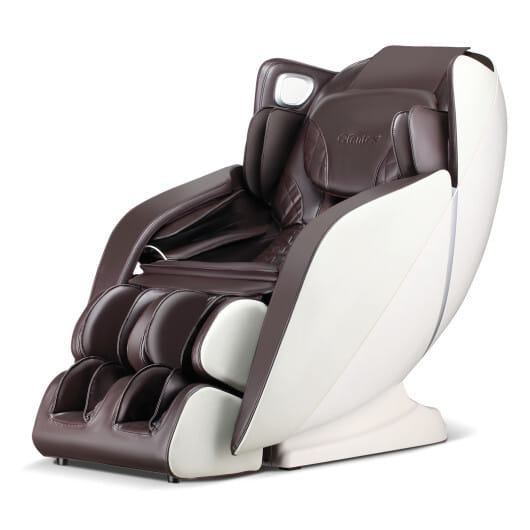
Massage Chairs-Relax with the best choice
Are Expensive Massage Chairs Worth the Investment?
You’ve seen them in airport lounges, high-end spas, and the homes of friends who seem to have mastered adulting. Luxury massage chairs—priced anywhere from $3,000 to $12,000—promise pain relief, stress reduction, and better sleep. But for the busy professional juggling work, family, and a budget, the real question isn’t whether a massage feels good. It’s whether a five-figure chair actually delivers enough value to justify the cost.
After 20 years as a registered nurse in high-stress hospital environments—from Hawaii to the U.S. Virgin Islands—and years of hands-on work as a massage therapist, I’ve seen both sides of the pain relief equation. I’ve watched patients reach for another pain pill when what they really needed was sustained muscle release. I’ve also sat in $200 massage cushions that worked surprisingly well and $8,000 chairs that felt like a stiff hug from a robot.
So let’s cut through the marketing. Here’s what the research, user data, and clinical experience say about expensive massage chairs.
The Case for Investing in a High-End Massage Chair
- Chronic pain doesn’t take days off
Lower back pain affects roughly one in four adults in the U.S. at any given time. For professionals who sit eight to ten hours a day—clinicians, software developers, accountants, administrators—that pain becomes a persistent background hum. A 2021 review in the Journal of Clinical Medicine found that regular mechanical massage (including chair massage) significantly reduced chronic neck and back pain, with effects comparable to manual therapy for some people.
A quality chair means daily, consistent treatment. No appointments. No co-pays. No scheduling around a therapist’s availability.
- The math can work (if you actually use it)
Here’s a rough calculation: Professional massage therapy averages $80–$120 per hour session. If you currently receive one massage per week for chronic pain relief, that’s $4,000–$6,000 annually. A $5,000 chair pays for itself in 12–18 months, assuming you use it at least three to four times weekly. After that, every massage is essentially free.
Of course, this assumes you would otherwise pay for weekly professional massage. Many people don’t. For them, a $5,000 chair is a luxury purchase, not a medical necessity. And that’s okay—just be honest with yourself about it.
- Features that actually matter
Not all expensive chairs are created equal. The ones worth considering typically include:
- 3D or 4D roller mechanisms – These adjust roller depth and speed to mimic human hand pressure and rhythm. Cheaper chairs often use fixed 2D rollers that feel repetitive after a while.
- Body scanning – Sensors map your spine and shoulder height, customizing the massage to your frame. Without this, a six-foot-tall user and a five-foot-two user get the same roller track—and one of them will be disappointed.
- Zero-gravity recline – Elevating the legs above the heart reduces spinal compression and improves circulation. NASA-inspired, clinically useful.
- Heat therapy – Far-infrared heat in the lumbar region increases blood flow and tissue elasticity. In my nursing experience, patients with chronic muscle tightness respond noticeably better to massage with heat than without.
Lower-cost chairs ($500–$2,000) rarely include more than one of these features. High-end chairs integrate all of them.
The Case Against Expensive Chairs
- Diminishing returns above $4,000
Consumer satisfaction data suggests that the biggest jump in quality occurs between $500 and $2,500. A $1,500 chair with 3D rollers, heat, and decent build quality will satisfy most users. Above $4,000, improvements become incremental: quieter motors, more auto programs, fancier upholstery, and longer warranties.
One industry survey found that user satisfaction scores for chairs priced $4,000–$6,000 were only marginally higher than for $2,500–$4,000 chairs. The sweet spot for value appears to be $2,000–$3,500.
- Massage chairs are not medical devices
Despite marketing claims, most massage chairs are not FDA-regulated medical devices. They will not treat herniated discs, sciatica, or fibromyalgia the way physical therapy or targeted manual massage can. In fact, certain conditions—acute inflammation, recent surgery, deep vein thrombosis, and pregnancy—can be worsened by mechanical massage.
As a nurse, I’ve seen patients assume a massage chair would fix their chronic pain, only to delay proper medical evaluation for months. A chair is a complement to care, not a substitute for a diagnosis.
- Lifestyle mismatch is real
The most expensive chair in the world does nothing if it becomes a clothes rack. Industry data suggests that 25–30% of massage chair owners use their chair less than once per week after the first three months. Reasons include:
- The chair is bulky (many weigh 200+ pounds and require permanent floor space)
- The massage feels repetitive after the novelty wears off
- Family members disagree on intensity settings
- You simply forget to sit in it
A $200 handheld percussion massager used daily will outperform a $6,000 chair used twice a month. I’ve seen it happen again and again.
What the Research Actually Says About Massage Chairs
A 2020 randomized controlled trial compared a high-end massage chair to traditional Swedish massage for office workers with neck and shoulder pain. Both groups improved significantly, but the chair group reported slightly lower satisfaction with the “emotional connection” to the treatment. In other words, chairs relieve pain effectively but don’t fully replace the human element many of us value.
So… Are Massage Chairs Worth It?
Buy the expensive Massage chair if:
- You have diagnosed chronic muscle tension or mild-to-moderate back pain
- You currently spend $150+ per month on professional massage
- You have dedicated floor space (at least 30 sq ft) and will commit to using the chair 3+ times per week for at least two years
- You value convenience and privacy over the social experience of a spa or therapist visit
Skip the expensive chair if:
- You’re pain-free and just want occasional relaxation (buy a good massage cushion or gun instead)
- You have acute injuries, uncontrolled high blood pressure, or any condition your doctor would flag for deep tissue work
- You live in a small apartment or plan to move within two years (chairs are brutal to relocate)
- You’re hoping the chair will replace exercise, stretching, or ergonomic improvements (it won’t)
A Final Thought From Someone Who’s Been There
After 20 years of twelve-hour shifts on hard hospital floors—and even more years working as a massage therapist—I’ve learned that the best wellness tool is the one you actually use. A $20 massage ball in your desk drawer beats a $10,000 chair gathering dust in the basement.
But if you sit in that chair every evening while decompressing from a high-stress job, and it keeps you off muscle relaxers and away from chronic headaches, then it’s not an expense. It’s an investment in staying functional, sane, and pain-free.
Try before you buy. Most high-end showrooms offer 15- to 30-minute demos. Pay attention to how you feel the next morning, not just during the massage. And if you’re somewhere between “definitely yes” and “definitely no,” consider a certified refurbished model from a reputable brand.
Your back—and your budget—will thank you.
Created by Lucille Wenger RN, LMT with AI assist
—
Disclaimer: This article is for informational purposes and does not constitute medical advice. Always consult a healthcare provider before beginning any new treatment for chronic pain or injuries,
Shop With Confidence ✔ 30-Day Money-Back Guarantee ✔ Safe & Secure Checkout ✔ Real Customer Support ✔ Quality You Can Trust